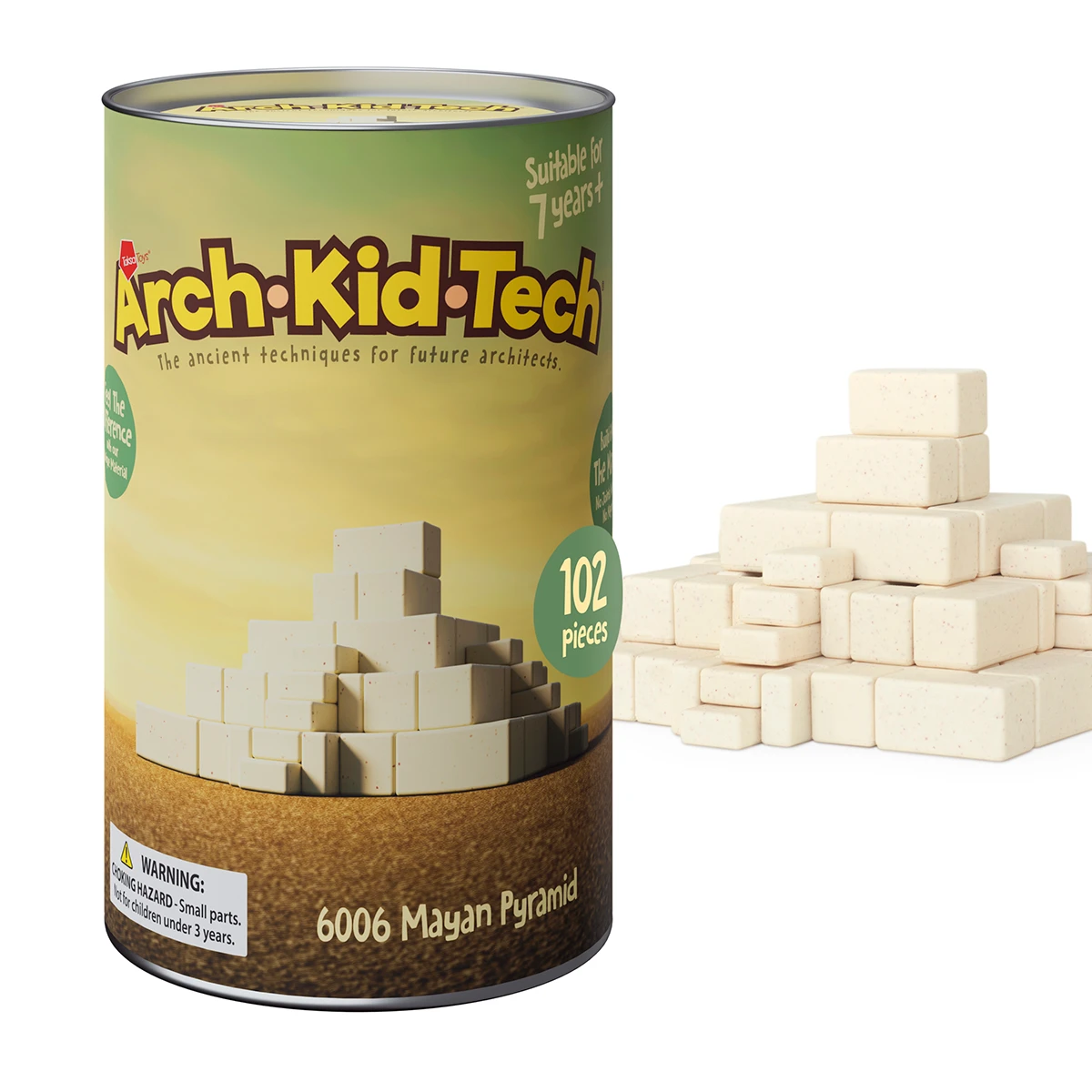
Arch-Kid-Tech® Mayan Pyramid (102 pcs)
€ 39.99
Building Outward Through Layers
An exploration of how an existing structure can be enlarged by building a new form around it.
Children begin with a smaller pyramid, then add outer layers to create a larger structure, observing how construction can expand outward while preserving what was built before.
Ideal for children aged 7+ who enjoy step-by-step building and are curious about how architecture can grow around what already exists.
What’s Inside the Box
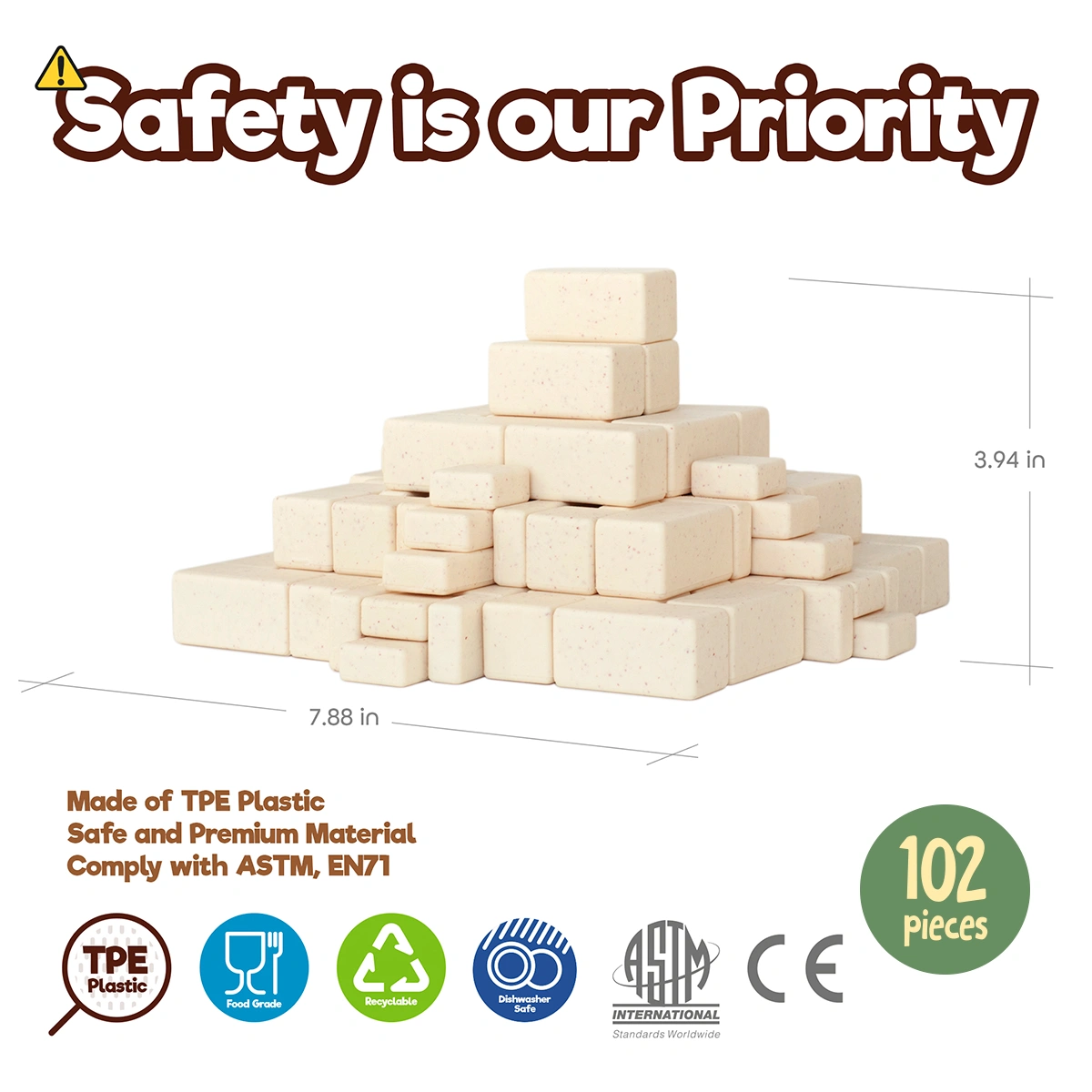
- 102 building pieces in 4 distinct forms
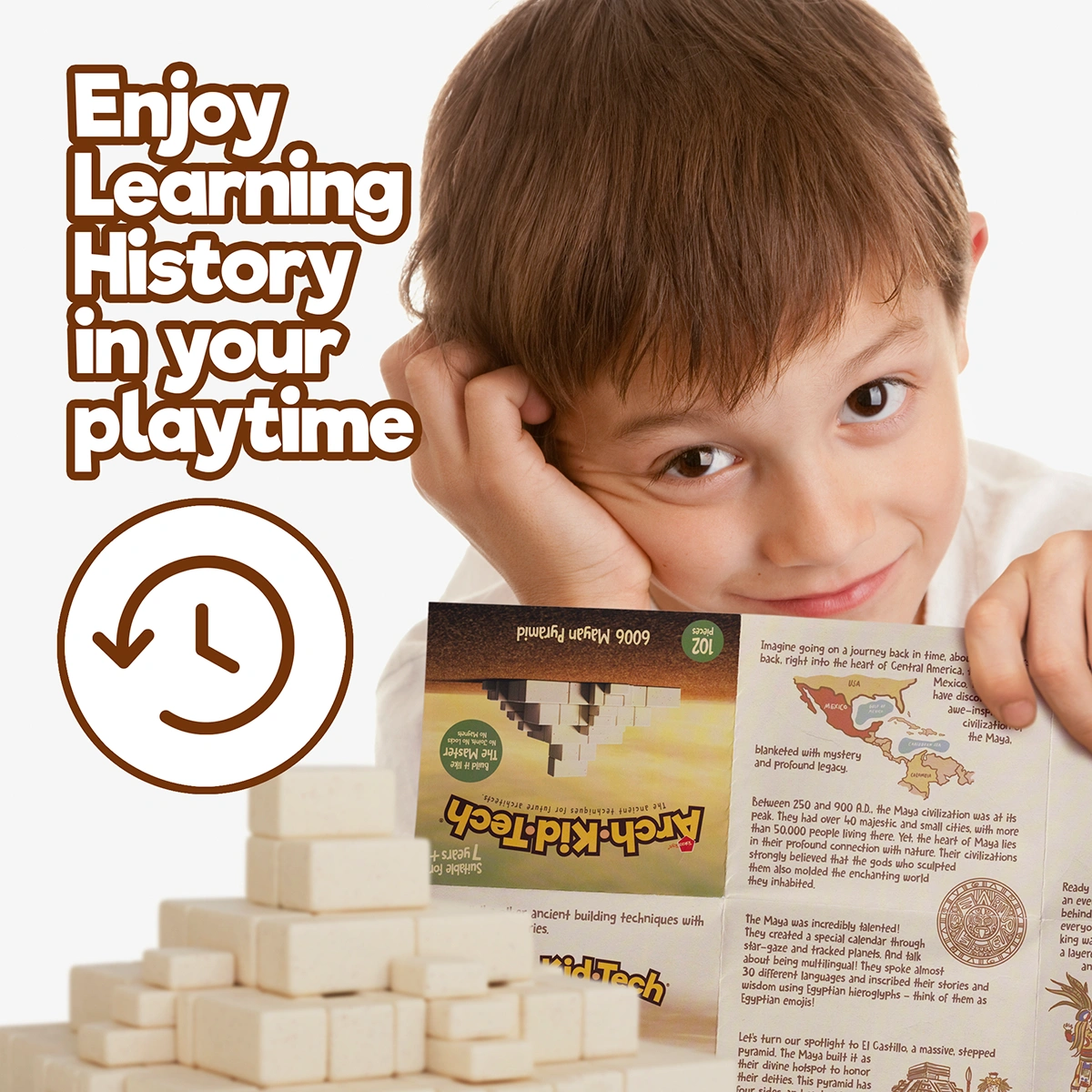
- Step-by-step building guide leaflet with illustrated insights into ancient Mayan civilization, culture, and architecture
Key Features
- A Structure Within a Structure – A larger pyramid is built around a smaller one, leaving the earlier form enclosed within.
- Expansion Through Outer Layers – New construction increases the scale of the original structure from the outside.
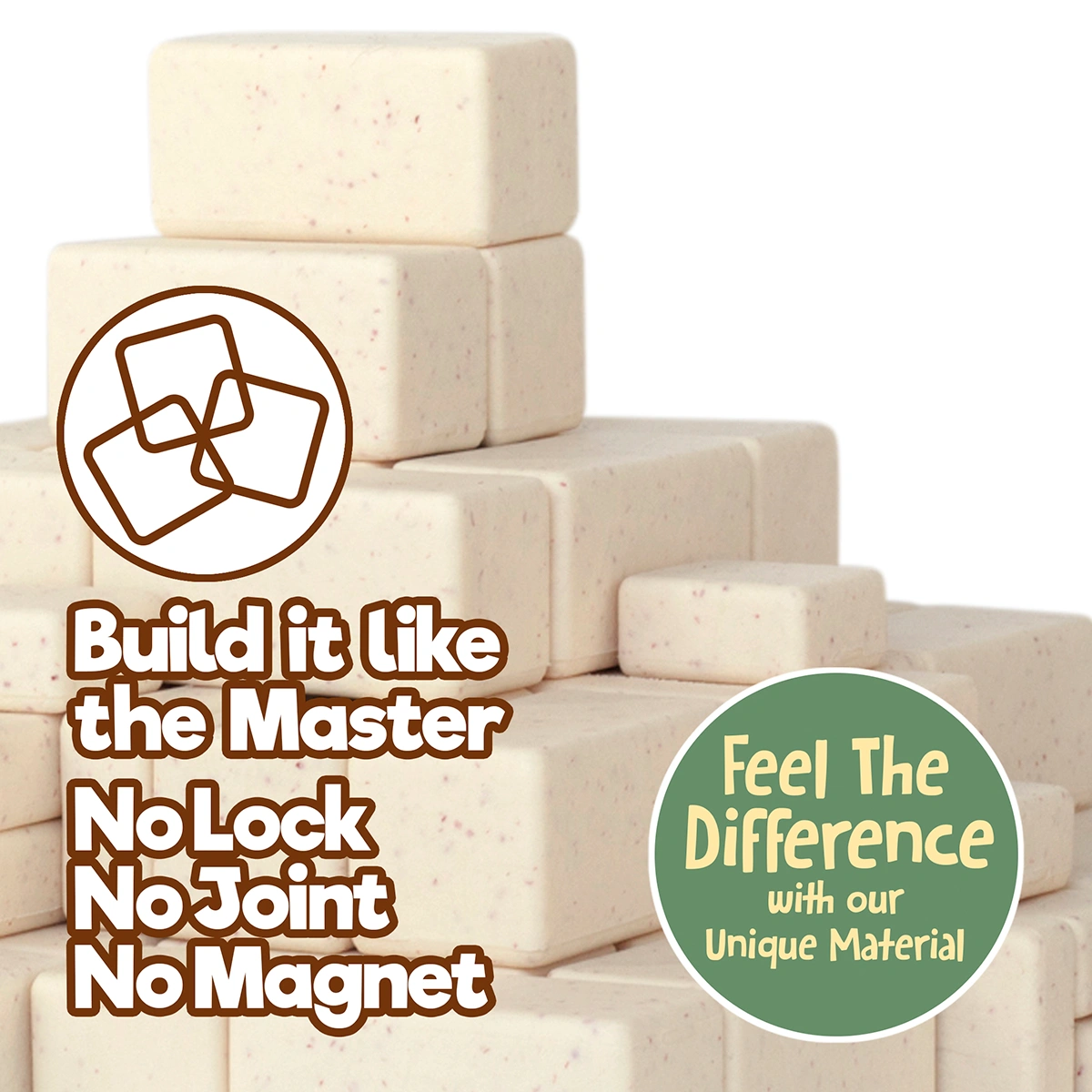
- No Connectors, Only Structural Logic – The structure stands through form, placement, alignment, and gravity.
- Visible Cause and Effect – The position of the inner pyramid affects how the outer structure develops around it.
- Building in Sequence – The smaller form must be completed before the surrounding layers are added.
- Tactile Support for Precise Placement – The slightly flexible surface provides enough friction for controlled stacking and fine adjustment.
- Made from food-grade TPE with a soft, solid feel
- Washable and suitable for repeated use at home or in classrooms
- Toy Safety: Tested to meet ASTM F963, EN 71, and applicable JFSL requirements.
- Suitable for children ages 7 and up
Coming Soon
Description
Building Outward Through Layers
Arch-Kid-Tech® Mayan Pyramid is an architectural building toy that helps children explore how an existing structure can be enlarged through new construction around it.
The building process begins with a smaller pyramid. Once this inner form is complete, additional pieces are arranged around it to create a larger outer structure.
Children can observe how the original pyramid remains within the completed construction, while each new layer changes its scale and exterior form.
Understanding How the Structure Stands
Arch-Kid-Tech® uses no magnets, locks, or hidden supports. Every piece must be positioned in relation to the pieces beside and beneath it.
In the Mayan Pyramid, the inner structure establishes the position and scale of what follows. The outer layers must be aligned carefully so that the larger form develops evenly around it.
Stability depends on consistent placement, orderly layering, and the relationship between the enclosed pyramid and the construction surrounding it.
What children build is therefore more than a stepped pyramid. It is a direct way to observe how architecture can expand by incorporating an earlier structure into a larger one.
Learning Through Real Feedback
Many construction toys hold pieces together even when alignment is imperfect. Arch-Kid-Tech® makes the result visible.
When the outer pyramid does not develop as expected, children can return to the guide and examine the position of the inner structure, the spacing of the surrounding pieces, and the alignment of each layer.
A small difference near the center may become more visible as the construction expands outward. Children must compare the developing form with the guide and determine where an adjustment is needed.
This visible relationship between placement and outcome encourages observation, comparison, adjustment, and increasingly precise construction.
Building in Sequence
The illustrated guide begins with the smaller pyramid before introducing the layers that surround it.
Each stage depends on the size, position, and alignment of what has already been completed. The outer structure cannot develop correctly unless the inner form has first been established.
With repeated building, children may begin to anticipate how much space the next layer requires and understand how an earlier structure can guide the proportions of a later one.
Following the guide helps reveal how construction can grow outward while preserving what was built before.
What the Building Process Involves
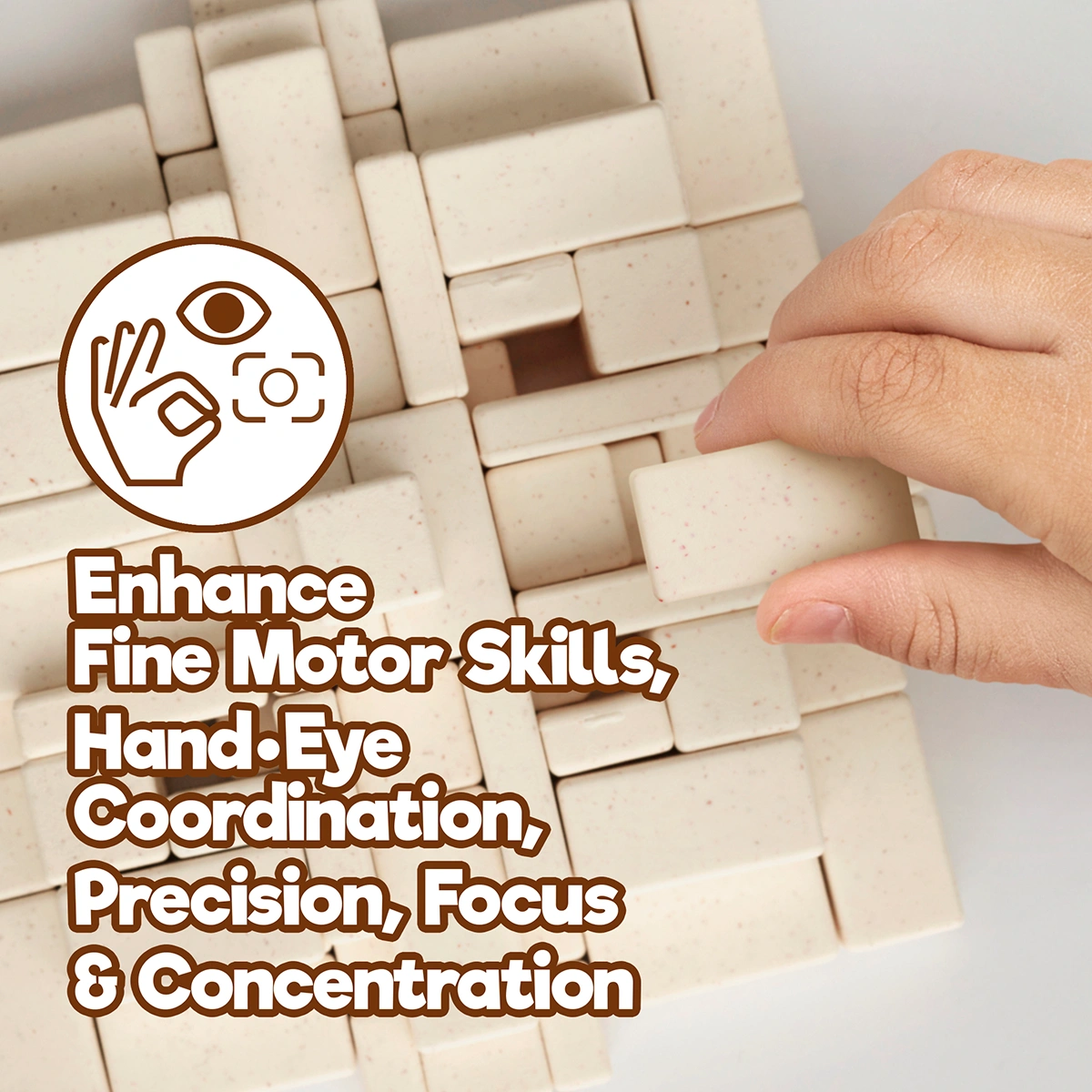
Building and rebuilding the Mayan Pyramid involves following a visual sequence, comparing four distinct forms, maintaining alignment between the inner and outer layers, and coordinating visual attention with precise hand placement.
The process creates opportunities to use spatial reasoning, concentration, patience, and problem solving within a clear physical task.
Made from food-grade TPE, the pieces have a soft, solid feel with slight flexibility and enough friction for controlled stacking and fine adjustment. They are washable and designed for repeated use at home or in classrooms.
Awards & Recognition
The Arch-Kid-Tech® series has received recognition from the Parents’ Picks Awards 2024/2025:
What Set Is Right For You?
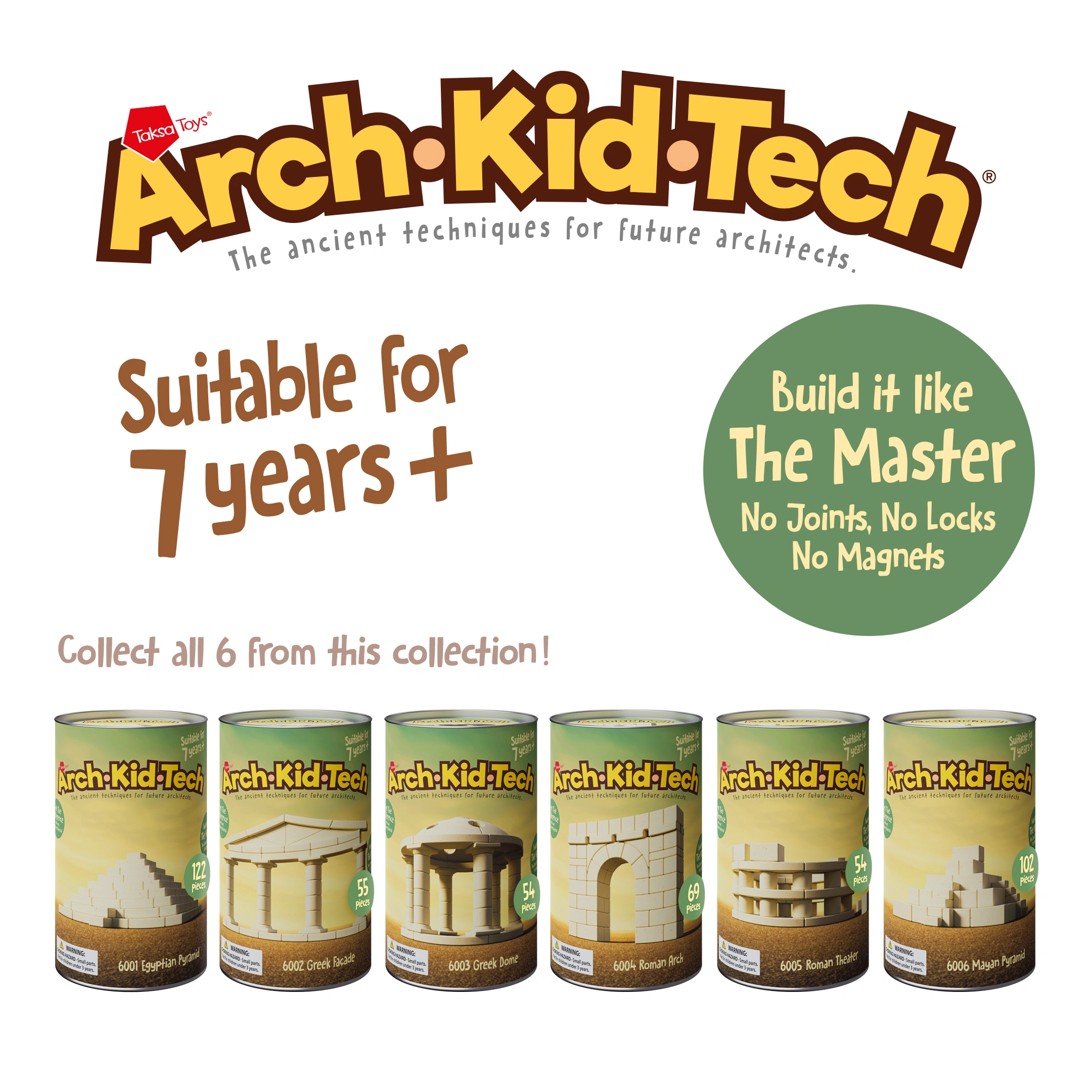
| Set | Core Idea | What Children Explore | Best For |
|---|---|---|---|
| Egyptian Pyramid | Ordered layering and repetition | A broad base gradually narrows upward as repeated forms are placed with consistent spacing and alignment. | Children who enjoy step-by-step building, repeated patterns, and seeing how simple units become a large structure. |
| Greek Façade | Columns, beams, pediment, and proportion | Columns support the beams, while the pediment completes the upper form. Spacing, alignment, and proportion shape the façade as a whole. | Children interested in vertical, horizontal, and sloping elements and precise architectural arrangement. |
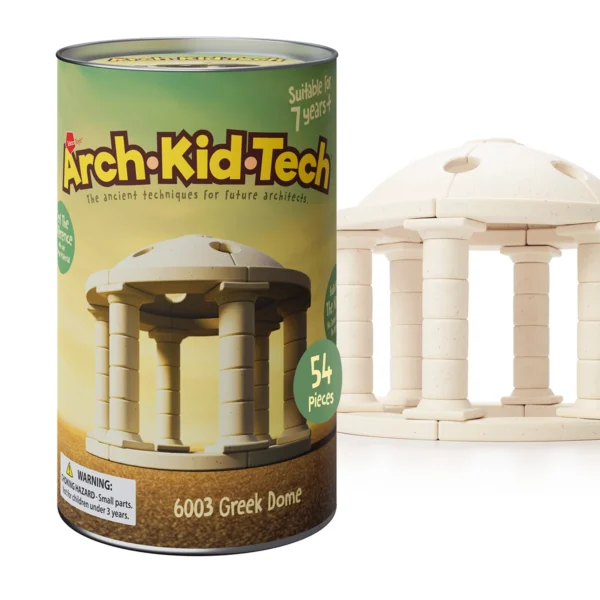
| Greek Dome | Curved elements around a central point | Curved pieces are positioned in relation to one another and gradually brought together to create a continuous surface. | Children who enjoy working with curves, direction, angle, and precise alignment. |
| Roman Arch | Wedge-shaped pieces, compression, and keystone | Wedge-shaped pieces redirect compressive force along the curve, while the keystone completes the arch. | Children curious about how an arch can span an opening without support beneath it. |
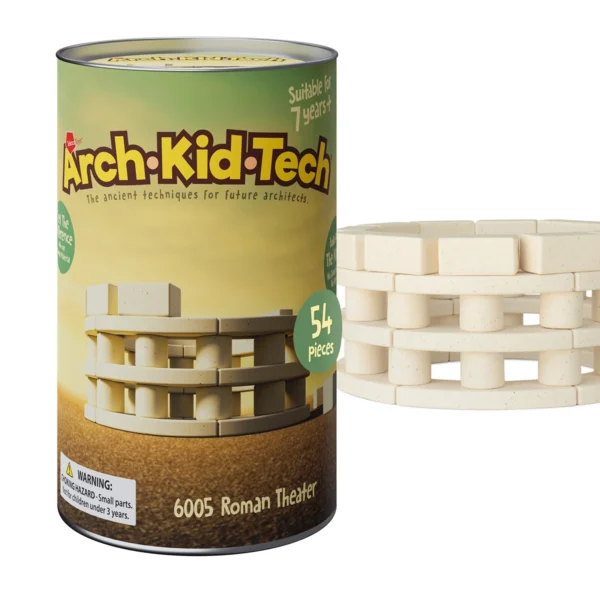
| Roman Theater | Repetition and enclosed space | Repeated structural units form continuous layers, showing how spacing and direction define both architectural form and interior space. | Children interested in how repeated parts can become a larger structure and shape the space within it. |
| Mayan Pyramid | Expansion around an existing structure | A smaller pyramid becomes the inner core of a larger one as new layers are added around it. | Children who enjoy layered construction and exploring how one structure can grow around another. |
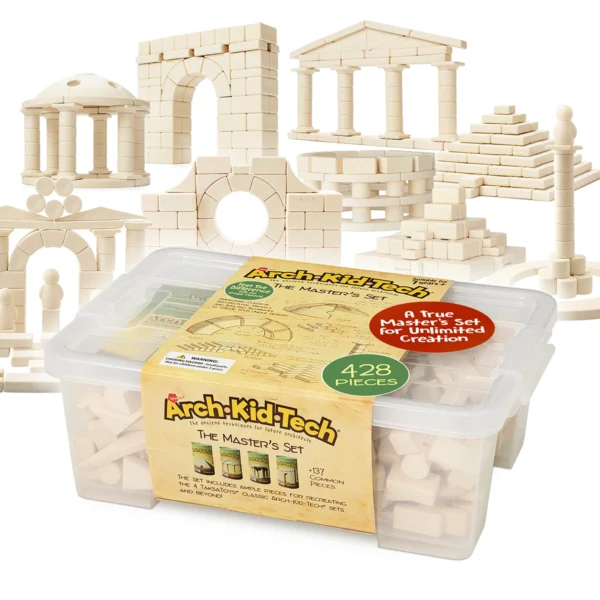
| The Master’s Set | Comparing and combining multiple structural systems | Fifteen forms and six guided models can be compared, adapted, and combined to create new structural relationships. | Children ready to move from guided construction toward experimentation and independent architectural design. |
Additional information
| Weight | 1.5 kg |
|---|---|
| Dimensions | 19 × 23 × 14 cm |
| Material | Thermoplastic Elastomer (TPE) |
| Safety Warning | Choking Hazard – Small parts. Not for children under 3 years. |
Only logged in customers who have purchased this product may leave a review.
Related products
You may also like…
-

-
-
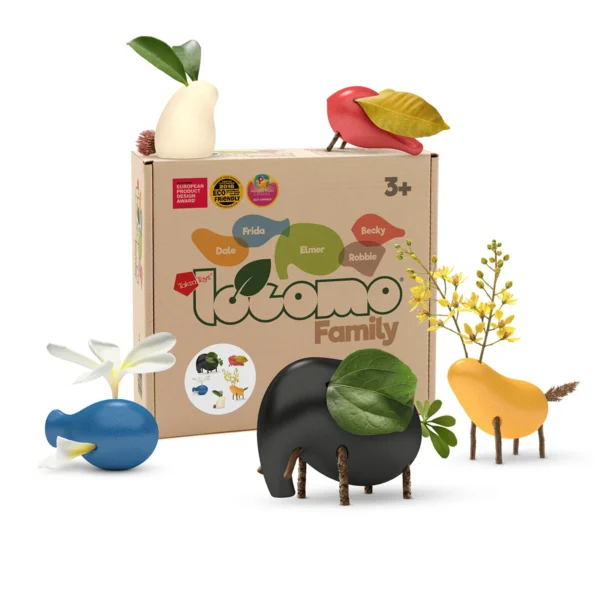
LOCOMO® Family (5 characters)
Where Nature Becomes Character
€ 44.99Coming SoonSelect options This product has multiple variants. The options may be chosen on the product page -
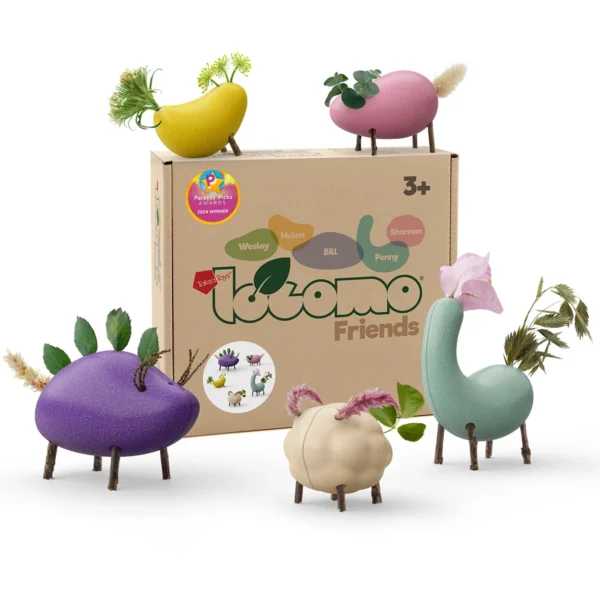
LOCOMO® Friends (5 characters)
Where New Characters Inspire New Stories
€ 44.99Coming SoonSelect options This product has multiple variants. The options may be chosen on the product page
Reviews
There are no reviews yet.